
Introduction
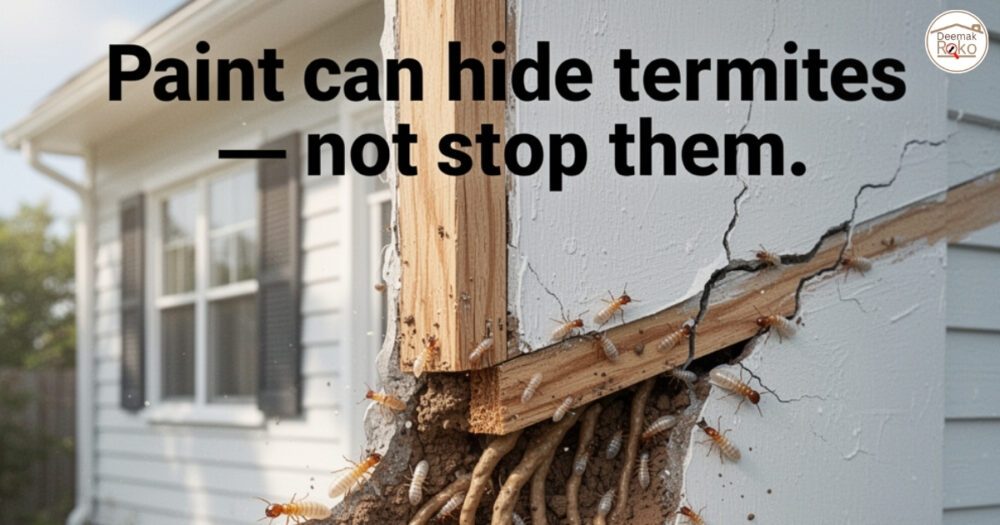
Many homeowners believe that a fresh coat of paint can protect walls and wooden structures from termites. Unfortunately, this is one of the most common myths about termite control. In reality, paint may hide the signs of termites, but it cannot stop Termite damage. Termites continue to eat wood silently behind painted walls, doors, and frames until the damage becomes severe.
By the time visible cracks or hollow wood appear, the infestation may already be extensive.
Let’s understand why paint cannot stop termites and what you should do to protect your home.
Why Paint Cannot Stop Termite Damage
Paint works only as a surface coating. It does not penetrate deep enough into wood to prevent termites from attacking it.
Termites are capable of:
-
Entering homes through tiny cracks in walls
-
Creating mud tubes inside structures
-
Eating wood from the inside out
Because of this behavior, termites can continue feeding behind painted surfaces without being noticed.
In fact, freshly painted walls can sometimes delay the detection of termite activity, making the problem worse.
How Termites Hide Behind Painted Walls
Termites are experts at staying hidden. They avoid open air and light, which is why they travel through mud tubes and tunnels.
Inside a painted structure, termites can:
-
Create tunnels within wooden frames
-
Feed on furniture, doors, and window panels
-
Build hidden mud channels behind paint layers
This means your walls may look perfectly fine on the outside while termites slowly destroy the structure from within.
Signs Termites May Be Hidden Behind Paint
Even if the paint looks intact, there are subtle signs that may indicate termite activity:
1. Hollow Sound in Wood
When you tap on wooden surfaces, they may sound hollow because termites have eaten the inside.
2. Cracked or Bubbling Paint
Termites create moisture while building tunnels, which can cause paint to bubble, peel, or crack.
3. Mud Tubes Near Walls
Thin mud tunnels along walls or foundations are a strong sign of subterranean termites.
4. Tight Doors or Windows
As termites damage wooden frames, structures may warp, making doors or windows difficult to open.
5. Fine Wood Dust
Termites sometimes leave behind small particles that resemble wood powder or soil.
If you notice any of these signs, a professional termite inspection is highly recommended.
Why Early Termite Treatment Is Important
Termites cause billions of dollars in property damage worldwide every year. The biggest problem is that they work silently and continuously.
Without treatment, termites can:
-
Weaken wooden structures
-
Damage furniture and flooring
-
Reduce the value of your property
-
Cause costly structural repairs
Early detection and treatment can save homeowners from significant financial losses.
The Best Way to Protect Your Home from Termites
Instead of relying on paint, experts recommend professional termite control solutions such as:
Pre-Construction Termite Treatment
This treatment creates a chemical barrier in the soil before construction begins, preventing termites from entering the building.
Post-Construction Termite Treatment
If your home is already built, professionals drill small holes and inject anti-termite chemicals into the soil around the foundation.
Reticulation Termite System
This advanced system installs underground pipelines that distribute termite control chemicals evenly around the structure.
Regular inspections combined with professional treatment offer long-term protection against termite infestations.
Common Myth: “Fresh Paint Means No Termites”
Many homeowners repaint walls to cover cracks or damage, assuming it solves the problem.
However, paint only hides the termite damage temporarily.
Termites continue feeding behind the scenes, which can eventually lead to serious structural issues.
Therefore, repainting should never replace a proper termite inspection.
Conclusion
Paint may make your home look clean and new, but it cannot stop termites from destroying wood inside your walls.
If termites are present, they will continue feeding regardless of how many times you repaint the surface.
The safest approach is to identify the infestation early and apply professional termite treatment to eliminate the colony and protect your home permanently.
Remember:
Paint can hide termites — but only proper termite control can stop them.
Frequently Asked Questions (FAQs)
Can termites eat through paint?
Termites do not eat paint, but they can easily tunnel behind painted surfaces to reach wood.
Does painting wood prevent termites?
No. Paint may slow down detection, but it does not prevent termite attacks.
How often should a home be inspected for termites?
Experts recommend a termite inspection at least once a year to detect early infestations.
What is the best way to prevent termites?
The most effective prevention method is professional termite treatment and regular inspection.