
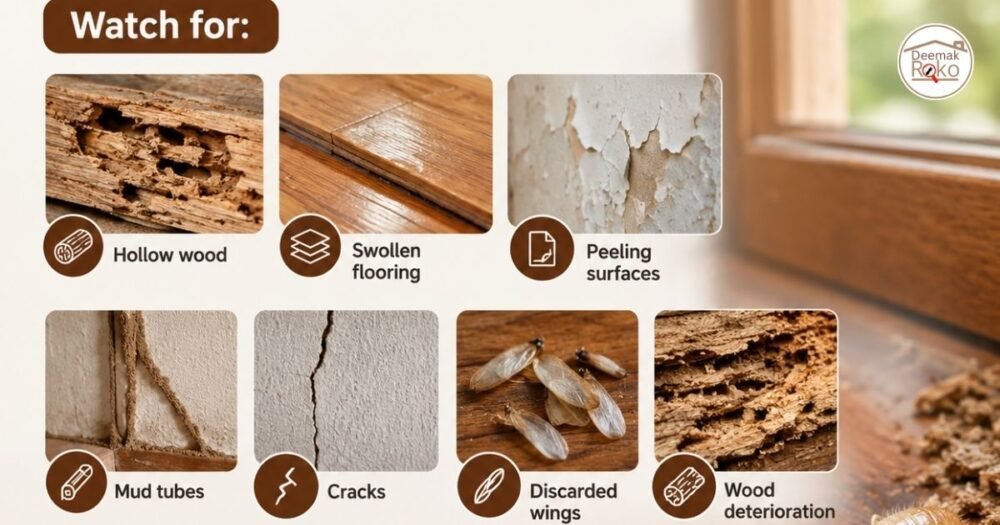
Termite Damage Doesn’t Always Look Like Termite Damage: 7 Warning Signs to Watch
Termites can damage wood, flooring, walls, doors, and other parts of a property without being immediately visible. In many cases, the first signs are not live termites but changes in the structure or surfaces around your home.
That is why knowing the common signs of termite damage can help you arrange an inspection before the problem becomes more extensive.
From hollow-sounding wood and swollen flooring to mud tubes and discarded wings, small changes can indicate hidden termite activity.
What Does Termite Damage Look Like?
Termite damage does not always have one obvious appearance. Because termites can remain hidden inside wood, soil, walls, foundations, and other concealed areas, the visible symptoms may look like ordinary wear, moisture damage, ageing, or construction problems.
Some warning signs deserve closer inspection, especially when multiple signs appear in the same area.
Here are seven common signs to watch for.
1. Hollow or Damaged Wood
Hollow-sounding wood can be a warning sign of termite activity.
Termites feed on cellulose found in wood and can gradually consume the material from the inside. As the internal structure becomes damaged, wooden doors, frames, furniture, skirting, beams, or other components may sound hollow when tapped.
Look for:
- Hollow-sounding wooden surfaces
- Soft or weakened wood
- Small holes or damaged areas
- Wood that breaks or crumbles easily
- Blistered or uneven wooden surfaces
Do not assume that every damaged wooden surface has termite activity. A professional termite inspection can help determine the actual cause.
2. Swollen or Uneven Flooring
Changes in flooring can sometimes be associated with termite damage.
Wooden flooring, laminate, parquet, or other flooring materials may become uneven, raised, loose, or swollen. While moisture, plumbing problems, and installation issues can also cause these symptoms, termite activity should be considered when other warning signs are present.
Pay particular attention to:
- Raised flooring
- Loose wooden flooring
- Unusual hollow sounds
- Floorboards that feel weak
- Changes near walls, bathrooms, kitchens, or damp areas
A proper inspection can help distinguish termite damage from moisture-related problems.
3. Peeling Paint or Surface Damage
Peeling paint, bubbling surfaces, or damaged plaster are often associated with moisture, but they should not automatically be ignored when termite activity is suspected.
Termites can travel through concealed areas and may affect surfaces around wooden components, wall-floor junctions, door frames, and other structural areas.
If peeling or damaged surfaces appear together with mud tubes, cracks, hollow wood, or other termite signs, consider arranging a professional inspection.
4. Mud Tubes on Walls or Foundations
Mud tubes are one of the more recognizable signs associated with subterranean termites.
Termites may construct narrow mud-like pathways that help them travel while maintaining protection and moisture.
These tubes may appear along:
- Foundation walls
- External walls
- Internal wall surfaces
- Cracks and joints
- Around pipes
- Near floors and skirting
- Other concealed entry points
If you find a suspected termite mud tube, avoid simply removing it and assuming the problem is solved. The underlying termite activity may still be present.
5. Cracks and Damaged Areas
Cracks alone do not prove termite activity. Buildings can develop cracks for many reasons, including settlement, temperature changes, moisture, ageing, and construction-related factors.
However, unusual cracks or openings near suspected termite pathways may provide access points for termite movement.
If cracks appear alongside mud tubes, damaged wood, hollow surfaces, or other warning signs, a termite inspection can help identify the cause.
6. Discarded Wings Near Windows and Doors
Finding piles of discarded wings around windows, doors, light sources, or other areas can be a warning sign of termite activity.
Reproductive termites, commonly called swarmers or alates, may emerge during suitable conditions. After leaving the colony, they can shed their wings.
Look for:
- Small piles of wings
- Wings near windows
- Wings around doors
- Wings near lights
- Winged insects appearing indoors
Do not ignore repeated sightings. A professional inspection can help determine whether the property has an active termite problem.
7. Wood Deterioration
Visible deterioration of wooden components can become more noticeable as termite damage progresses.
Doors, frames, skirting, cabinets, furniture, wooden flooring, and other cellulose-based materials can show signs such as:
- Crumbling wood
- Surface deterioration
- Small openings
- Weak wooden sections
- Blistered or uneven surfaces
- Loss of structural strength
The visible damage may represent only part of the problem because termite activity can remain concealed inside or behind the affected material.
Why Early Termite Inspection Matters
Termites can remain hidden for long periods, making early detection important.
A property may appear normal from the outside while termite activity develops inside wooden components, wall cavities, foundations, or other concealed areas.
Early inspection can help:
- Identify possible termite activity
- Locate affected areas
- Assess the extent of damage
- Determine possible termite entry points
- Recommend an appropriate treatment approach
- Reduce the risk of prolonged damage
The sooner suspicious signs are investigated, the easier it can be to understand what is happening and plan the appropriate termite control solution.
Termite Damage vs. Other Property Problems
Not every crack, peeling surface, swollen floor, or damaged wooden component is caused by termites.
For example:
Swollen flooring may be caused by moisture or plumbing leakage.
Peeling paint may result from dampness or poor surface preparation.
Cracks may be related to settlement, temperature changes, or structural movement.
Wood deterioration may result from ageing, moisture, fungi, or insects other than termites.
This is why professional inspection is valuable. Instead of treating every visible symptom as termite damage, an inspection can help identify the likely cause and determine whether termite treatment is required.
Common Areas Where Termites May Be Found
Termites can affect different parts of a property, including:
- Wooden doors and frames
- Window frames
- Wooden flooring
- Skirting
- Cabinets and furniture
- Wall-floor junctions
- Foundations
- Construction joints
- Areas around service openings
- Moist or concealed areas
Regular inspection becomes particularly useful for properties with extensive wooden components or areas where moisture and soil contact create favourable conditions for termite activity.
Termite Treatment Should Match the Property
There is no single termite treatment approach that is suitable for every property.
Depending on the construction, location, extent of activity, and whether the property is under construction or already occupied, professional termite control may involve different approaches.
Post-Construction Termite Treatment
For existing buildings, treatment may include targeted methods such as Drill-Fill-Seal treatment, spot treatment, soil treatment, or other professional termite-control methods based on the inspection findings.
Pre-Construction Termite Protection
For new buildings, termite protection can be planned during construction. Soil treatment and a properly designed anti-termite reticulation system can provide a planned approach to termite protection before flooring and final finishes are completed.
Reticulation System and Future Refill
A termite reticulation system creates concealed treatment pathways that can provide access for future chemical recharge without depending entirely on repeated drilling through finished surfaces.
For new construction, planning termite protection before flooring and other finishes can make future treatment access more convenient.
Don’t Wait Until Termite Damage Becomes Obvious
One of the biggest mistakes property owners can make is waiting for visible damage before considering termite protection.
By the time wood becomes visibly damaged, flooring changes, or extensive surface deterioration appears, termite activity may already have been present for some time.
Instead, watch for early warning signs such as:
Hollow wood • Swollen flooring • Peeling surfaces • Mud tubes • Cracks • Discarded wings • Wood deterioration
These signs do not automatically confirm termites, but they are good reasons to investigate further.
Protect Your Property with Professional Termite Inspection and Treatment
Termite damage doesn’t always look like termite damage. What appears to be a small crack, peeling surface, swollen floor, or damaged piece of wood may have several possible causes.
If you notice multiple warning signs or suspect termite activity, arranging a professional termite inspection can help identify the problem and determine the right course of action.
DeemakRoko provides professional termite inspection, termite treatment, termite control, pre-construction termite protection, post-construction treatment, Drill-Fill-Seal treatment, and termite protection solutions for residential, commercial, and other properties.
Don’t wait for visible damage to become extensive. Early inspection can help identify hidden termite activity and support timely termite protection.
Get Expert Termite Protection
📞 Call / WhatsApp: +91 73143 44562
🌐 Website: www.deemakroko.com
DeemakRoko — India’s Trusted Termite Treatment Experts