
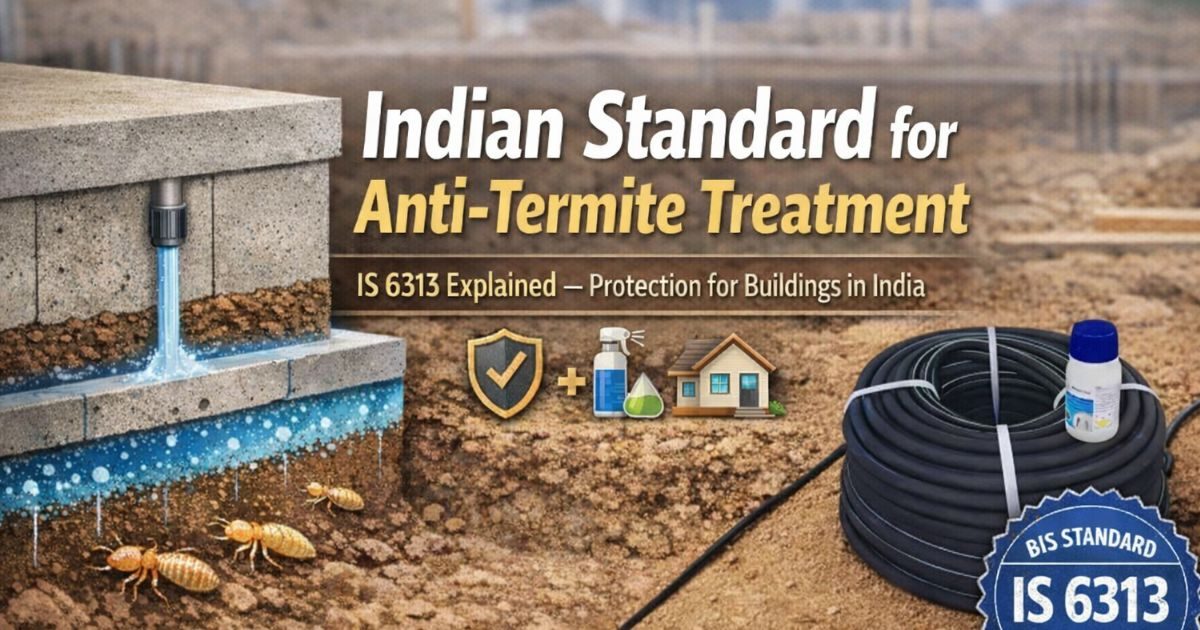
IS 6313 Explained: Indian Standard for Anti-Termite Treatment is essential knowledge for homeowners, builders, architects, and pest control professionals in India. Termites silently destroy wooden structures, foundations, and interiors, causing massive financial losses if left untreated. To regulate and standardize termite control practices, the Bureau of Indian Standards (BIS) introduced IS 6313, a comprehensive guideline for effective and safe anti-termite treatment.
In this blog, DeemakRoko breaks down IS 6313 in simple terms, explains its importance, treatment methods, chemicals used, and how compliance ensures long-term termite protection.
What Is IS 6313? An Overview of the Indian Standard
IS 6313 is an official Indian Standard issued by the Bureau of Indian Standards (BIS) that outlines procedures for anti-termite treatment in buildings. The standard applies to both pre-construction and post-construction stages.
Key Objectives of IS 6313
- Prevent termite infestation in buildings
- Standardize anti-termite treatment methods
- Ensure safety for humans and the environment
- Improve the durability and life span of structures
This standard acts as a technical reference for professional pest control companies like DeemakRoko, ensuring that every anti-termite treatment meets nationally approved benchmarks set by the Bureau of Indian Standards (BIS). By following these guidelines, service providers maintain consistency, safety, and long-term effectiveness in termite control practices across India.
Why IS 6313 Explained: Indian Standard for Anti-Termite Treatment Matters
Understanding IS 6313 Explained: Indian Standard for Anti-Termite Treatment helps stakeholders make informed decisions. Termite treatment without standards often leads to poor application, ineffective chemicals, and recurring infestations.
Importance of IS 6313 Compliance
- Ensures scientifically tested methods
- Protects property investments
- Reduces long-term maintenance costs
- Prevents structural weakening
- Improves resale value of buildings
At DeemakRoko, every treatment strictly follows IS 6313 guidelines to deliver guaranteed results.
Scope of IS 6313: Where the Standard Applies
IS 6313 covers termite treatment in:
- Residential buildings
- Commercial complexes
- Industrial structures
- Government and institutional buildings
The standard focuses on soil treatment, as subterranean termites primarily enter buildings through soil contact.
Pre-Construction Anti-Termite Treatment as per IS 6313
Pre-construction treatment is the most effective termite prevention method described in IS 6313.
1. Treatment of Foundation Trenches
Professionals apply chemical emulsion to foundation trenches before filling. This creates a chemical barrier between soil and structure.
2. Treatment of Plinth Filling
Soil inside the plinth area receives uniform chemical spraying to stop termite movement from below.
3. Treatment at Junction of Wall and Floor
IS 6313 mandates treatment at critical joints where termites commonly enter.
4. Treatment Around Service Pipes
Special attention is given to entry points like plumbing and electrical conduits.
Post-Construction Anti-Termite Treatment Under IS 6313
When termites attack existing buildings, IS 6313 provides clear post-construction treatment methods.
1. Drilling and Injection Method
Technicians drill holes along walls and inject termiticide into the soil beneath the foundation.
2. Roding Treatment
Rods deliver chemical emulsion deep into soil to form a continuous protective barrier.
3. Treatment of Wooden Structures
Door frames, cupboards, and wooden fittings receive surface or injection treatment.
4. External Perimeter Treatment
The soil around the building perimeter is treated to stop termite entry.
Chemicals Approved Under IS 6313
IS 6313 allows only approved and safe termiticides at specified concentrations.
Commonly Used Chemicals
- Chlorpyrifos (as per approved limits)
- Imidacloprid
- Other BIS-approved formulations
The standard emphasizes:
- Correct dilution ratios
- Uniform application
- Environmental safety
⚠️ Unregulated chemical use can cause health hazards and ineffective treatment.
Safety Guidelines in IS 6313
IS 6313 prioritizes safety for occupants and applicators.
Key Safety Measures
- Use of protective equipment
- Avoiding contamination of water sources
- Controlled application near living areas
- Proper disposal of chemical containers
At DeemakRoko, trained technicians follow strict safety protocols during every treatment.
IS 6313 Explained: Indian Standard for Anti-Termite Treatment for Builders
Builders benefit significantly by adopting IS 6313 at the construction stage.
Advantages for Builders and Developers
- Reduced future complaints
- Enhanced building credibility
- Compliance with government norms
- Increased customer trust
Many government tenders and large projects require IS 6313-compliant termite treatment.
Common Mistakes When IS 6313 Is Not Followed
Ignoring IS 6313 often leads to:
- Uneven chemical application
- Short-term protection
- Termite re-infestation
- Structural damage
- Increased repair costs
Choosing a professional brand like DeemakRoko ensures zero shortcuts and complete compliance.
How DeemakRoko Implements IS 6313 Standards
DeemakRoko stands out as a trusted anti-termite brand by strictly following IS 6313 protocols.
Our Process
- Detailed site inspection
- Customized treatment plan
- BIS-approved chemicals
- Trained and certified technicians
- Long-term protection assurance
We don’t just treat termites—we build termite-free foundations.
Benefits of IS 6313-Compliant Treatment for Homeowners
Homeowners gain peace of mind with IS 6313 treatment.
Key Benefits
- Long-lasting termite protection
- Safe for children and pets
- Cost-effective in the long run
- Structural integrity preserved
This is why DeemakRoko recommends IS 6313 Explained: Indian Standard for Anti-Termite Treatment awareness before choosing any service.
Frequently Asked Questions About IS 6313
Is IS 6313 mandatory in India?
While not legally mandatory for all projects, many government and commercial projects require it.
Is IS 6313 applicable for old buildings?
Yes, it includes detailed post-construction treatment guidelines.
How long does IS 6313 treatment last?
When applied correctly, protection can last several years.
Can I do IS 6313 treatment myself?
No. It requires professional equipment, chemicals, and trained applicators.
IS 6313 Explained: Indian Standard for Anti-Termite Treatment
IS 6313 Explained: Indian Standard for Anti-Termite Treatment is the backbone of effective termite control in India. Whether you are building a new home or protecting an existing property, following this standard ensures safety, durability, and long-term savings.
By choosing DeemakRoko, you partner with a brand that prioritizes BIS standards, expert execution, and customer trust.
🛡️ Protect your property before termites do!
Choose DeemakRoko’s IS 6313-compliant anti-termite treatment for guaranteed, long-lasting protection.
👉 Contact DeemakRoko today for a free consultation!