
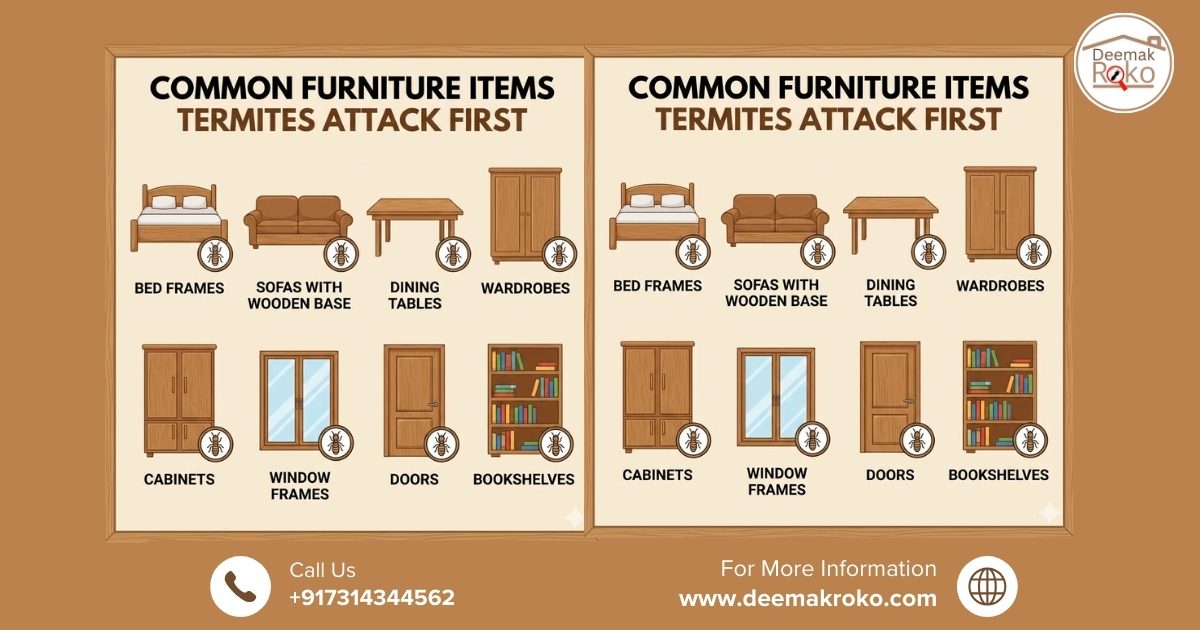
Termites are silent destroyers. By the time you notice visible damage, they may have already weakened your furniture from the inside. What makes them especially dangerous is that they do not attack randomly. They usually start with specific wooden furniture items inside your home.
In this blog, we will explain the most common furniture items termites attack first, why these items are vulnerable, and how you can protect your home before serious damage occurs.
Why Do Termites Target Furniture First?
Termites feed on cellulose, a material found in wood and wood-based products such as plywood, MDF, and particle board. Once termites enter a home, furniture becomes their easiest food source because it is often close to walls, floors, and moisture.
Warm and humid conditions further increase the risk, allowing termite colonies to grow quickly and silently.
Furniture Items Termites Attack First
1. Bed Frames
Wooden bed frames are often placed close to the floor, making them an easy entry point for termites. Since infestation starts internally, damage can remain hidden for a long time.
Common sign: Hollow sound when tapped or fine wood dust near the bed.
2. Sofas with Wooden Base
Many sofas have a concealed wooden structure beneath the upholstery. This dark and undisturbed area creates an ideal environment for termites.
Important note: Termite damage in sofas is often detected late due to fabric covering.
3. Dining Tables
Dining tables made of solid wood or engineered wood are frequently attacked, especially when placed near balconies or damp areas.
Watch for: Cracks, chipped edges, or loose joints.
4. Wardrobes
Large wooden wardrobes provide ample food for termites and are often installed against walls, allowing termites to spread easily.
Early indicator: Warped doors or shelves losing strength.
5. Cabinets
Kitchen and storage cabinets are highly vulnerable because moisture from sinks and appliances attracts termites.
Common issue: Mud tunnels or blistering on wooden surfaces.
6. Window Frames
Wooden window frames are exposed to humidity and water seepage, making them a common entry point for termites.
Check regularly: Corners and joints for mud tubes.
7. Doors
Main doors and interior wooden doors are at risk due to frequent contact with moisture and walls.
Warning sign: Powdery residue near door frames.
8. Bookshelves
Bookshelves are a prime target because termites feed on both wood and paper.
Hidden danger: Books may be damaged before the shelf shows visible signs.
How to Protect Your Furniture from Termites
-
Keep wooden furniture away from damp areas
-
Avoid placing furniture directly against walls
-
Repair water leakage immediately
-
Maintain proper ventilation indoors
-
Schedule regular professional termite inspections
Why Professional Termite Treatment Matters
DIY methods and home remedies may provide temporary relief, but they rarely eliminate termite colonies completely. Professional termite treatment targets termites at the source and provides long-term protection.
At DeemakRoko, we use advanced, safe, and effective termite control solutions designed to protect both furniture and structural wood.
Protect Your Home Before Termites Cause Permanent Damage
If you notice any signs of termite activity or want to safeguard your furniture, early action can save you from costly repairs and replacements.
Call us: +91 73143 44562
Visit: www.deemakroko.com
Timely termite treatment ensures your furniture stays strong, safe, and long-lasting.